Table of Contents
Automation consulting helps businesses replace manual, repetitive workflows with systems that run on their own. It covers everything from CRM setup to integrating disconnected tools to building automated approval chains. The goal is less time spent on data entry, fewer errors, and better visibility into operations.
This guide breaks down what automation consultants do, how engagements work from start to finish, what it costs in Canada, and how to choose the right firm for your business.
Key Takeaways
- Automation consulting covers four areas, not just software setup: workflow automation, CRM implementation, system integrations, and robotic process automation. The consultant maps your processes, selects the tools, and trains your team.
- Most automation projects fail when they skip discovery. Between 60% and 70% don't deliver expected ROI, almost always because the business bought tools before mapping the process.
- A structured engagement runs in four phases: discovery, design, implementation, and optimization. Skipping the first two is the top reason projects stall.
- Most SMB engagements in Canada cost CA$2,800 to CA$28,000 and take 4-8 weeks for moderate projects, 3-6 months for complex ones. Businesses report an average 35% cut in operational costs in the first year.
- Hire a process-first consultant with industry experience and published case studies. A firm that leads with a specific platform before understanding your workflows is a vendor, not an adviser.
-
What Is Automation Consulting?
Automation consulting is a professional service where an external specialist analyses your business processes, identifies what can be automated, and builds the systems to make it happen. The consultant handles the strategy, tool selection, and implementation so your team can focus on the work that actually needs a human.
The scope covers several categories of business automation:
- Workflow automation. Replacing manual handoffs, approvals, and status updates with automated sequences. Example: a purchase order that triggers an invoice, routes for approval, and updates the accounting system without anyone copying data between tools.
- CRM implementation and optimization. Setting up or rebuilding a customer relationship management system so the sales team actually uses it. This includes pipeline design, lead routing, reporting dashboards, and integrations with other tools your team already runs.
- System integrations. Connecting your CRM, accounting software, ERP, project management tools, and communication platforms so data flows between them automatically. No more exporting CSVs from one system and importing them into another.
- Robotic process automation (RPA). Software bots that handle high-volume, rule-based tasks like data entry, report generation, and invoice processing. RPA works best for tasks that follow the same steps every time.
Automation consulting is not the same as buying software. A platform like Pipedrive or HubSpot is a tool. A consultant is the person who maps your processes, picks the right tools, configures them to match how your business actually works, and trains your team to use them.
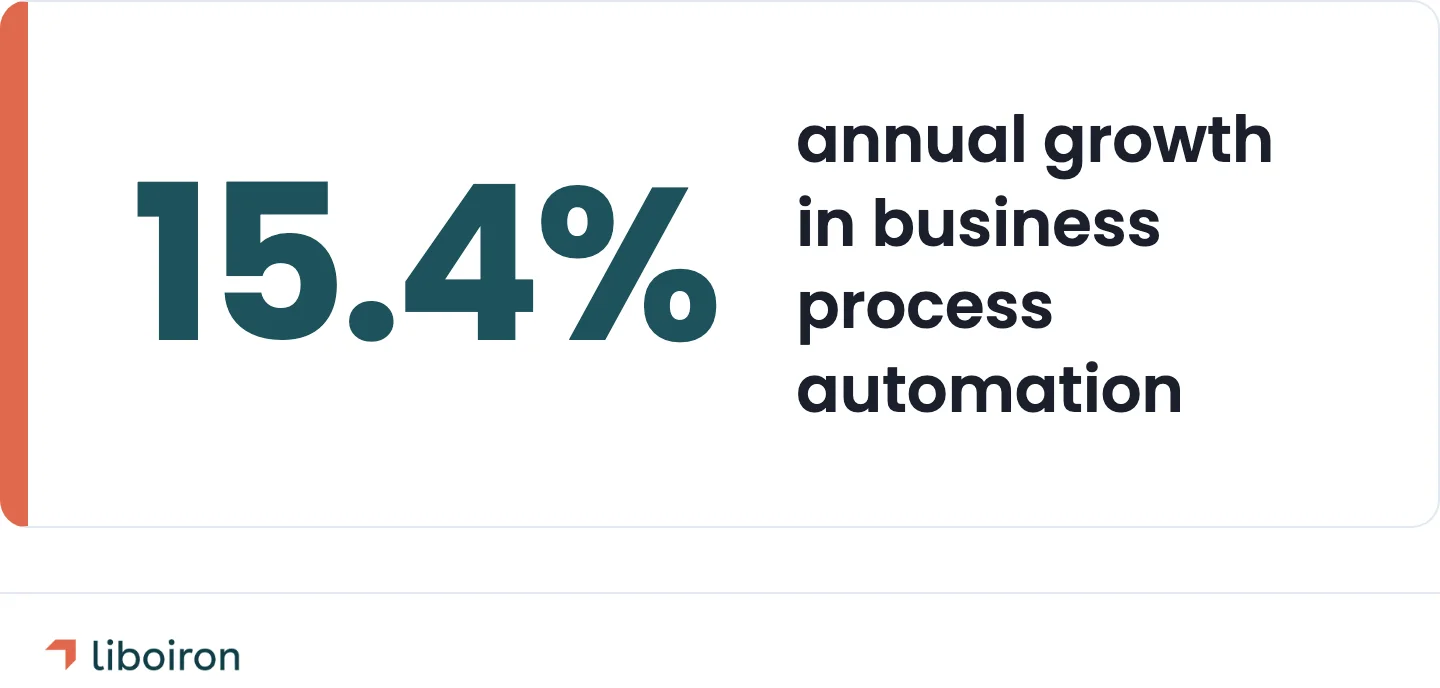
The business process automation market reached US$18.83 billion in 2026, growing at 15.4% annually. That growth is driven by businesses realizing that buying software is the easy part. Getting it to work inside an existing operation is where most projects stall.
What Does an Automation Consultant Actually Do?
An automation consultant delivers four core services. These map to the phases of any automation project, from initial assessment through ongoing support.
Process mapping and workflow analysis. Before any technology gets selected, the consultant documents how your business actually operates today. Not how it should operate. Not how the org chart says it operates. The real workflow, including the workarounds, bottlenecks, and manual steps your team has built over time.
This is the step most businesses skip when they try to automate on their own. The result is what practitioners call "paving the cow path." Automating a bad process means achieving negative outcomes at higher speed.
Tool selection and platform evaluation. The consultant evaluates which platforms fit your specific requirements, team size, budget, and existing tech stack. For CRM implementation, that might mean comparing Pipedrive, HubSpot, and other CRM platforms based on your sales process complexity. For workflow automation, it could mean evaluating integration platforms, RPA tools, or custom-built solutions.
The right tool depends on the process, not the other way around. A consultant who leads with a specific platform before understanding your workflows is a vendor, not an adviser.
Implementation and integration. Building the actual system: configuring the platform, connecting it to your existing tools via APIs and automation layers, migrating data from old systems, and testing everything before go-live. This includes custom development, dashboards, reporting logic, and automated notification chains.
For businesses that already have a CRM or project management tool sitting underused, implementation often means rebuilding what exists. We see this regularly. A company bought a CRM licence two years ago, configured it with default settings, and now the team treats it as an expensive contact list instead of a sales pipeline tool.
Training, support, and optimization. The system works. Now the team needs to use it. Training covers the daily workflows, not just the software features. Post-launch support catches issues early, adjusts configurations as the business evolves, and prevents the slow decay that happens when no one owns the automated system.
Unclear ownership is the most common cause of automation ROI erosion after go-live. The first six months are where habits form. If the consultant disappears after launch, adoption drops and the team drifts back to spreadsheets.
How an Automation Consulting Engagement Works
A structured engagement follows four phases. Skipping the first two is how most automation projects fail.
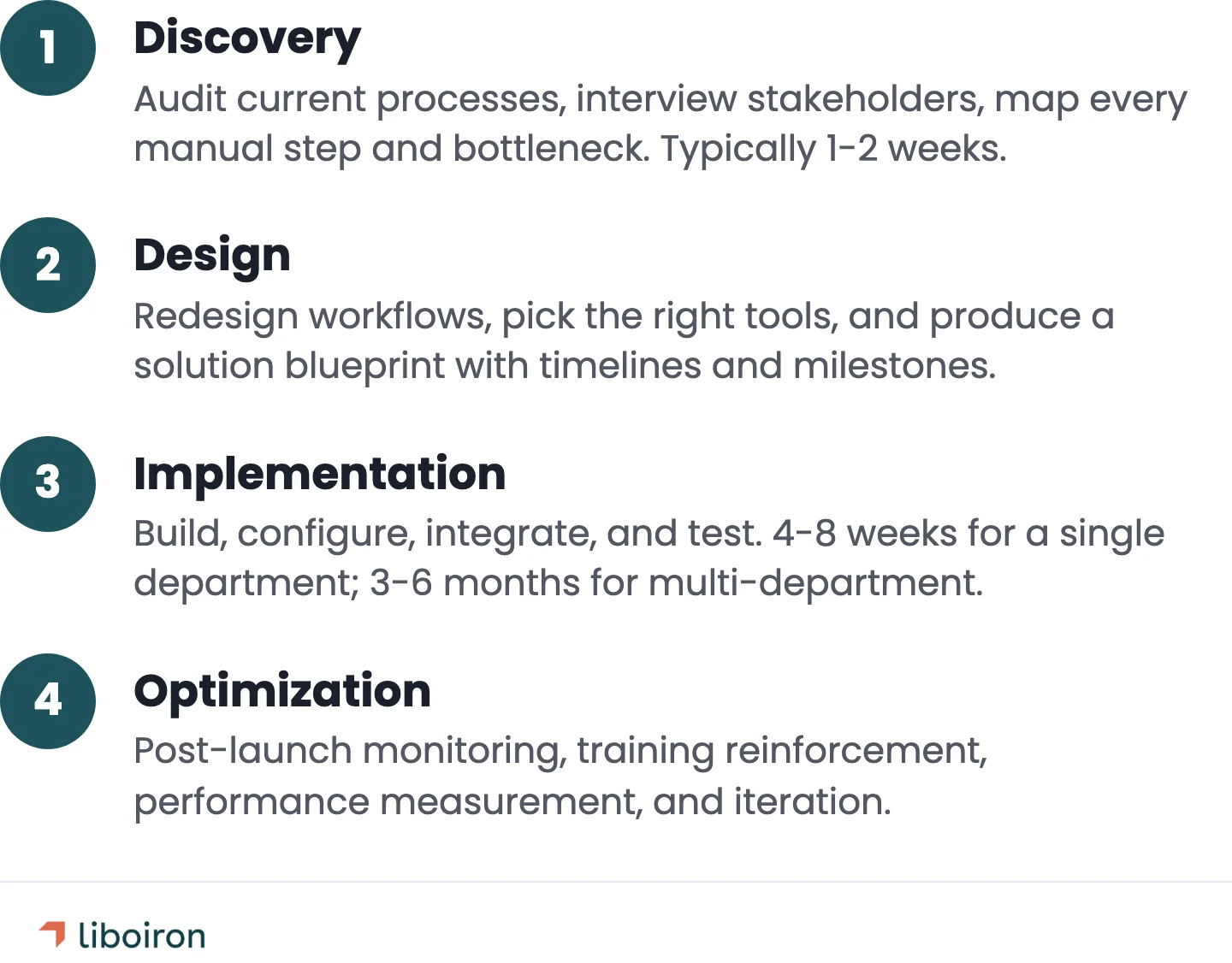
Phase 1: Discovery. The consultant audits your current processes, interviews stakeholders, and identifies where time and money are being lost. Deliverable: a process map showing every manual step, data handoff, and bottleneck. This phase typically takes 1-2 weeks.
Most businesses are surprised by what discovery uncovers. Teams develop workarounds over time that become invisible. A project coordinator manually updating three spreadsheets every morning because two systems don't talk to each other. A sales rep copy-pasting lead data from a web form into the CRM. These are automation candidates that only surface when someone maps the full workflow.
Phase 2: Design. Using the process map, the consultant redesigns workflows and selects the tools that fit. This phase includes: which processes to automate first (highest impact, lowest complexity), which tools to use, how they connect, and what the end state looks like. Deliverable: a solution blueprint with timelines and milestones.
Phase 3: Implementation. Building, configuring, integrating, and testing. This is where the technical work happens. For a single-department project (like rebuilding a CRM pipeline), implementation typically takes 4-8 weeks. Multi-department projects with custom integrations can run 3-6 months.
Phase 4: Optimization. Post-launch monitoring, training reinforcement, performance measurement, and iteration. Good consultants build this into the engagement scope, not as an add-on.
We follow this exact structure at Liboiron through our Discover, Design, Deploy, and Evolve methodology. The framework comes from 18+ years of building automation systems, first in industrial settings, then for business operations. The principle is the same: understand the process before you touch the technology.
Between 60% and 70% of automation projects fail to deliver expected ROI. The majority of those failures trace back to skipping discovery and design, jumping straight to buying tools. A structured engagement eliminates that risk.
Signs Your Business Needs an Automation Consultant
If any of these sound familiar, it is worth evaluating whether outside help would pay for itself.
Your team spends hours on manual data entry every week. Moving information between systems by hand. Building reports by pulling data from three different tools. Updating spreadsheets that should update themselves. If you added up the hours across your team, the number would be higher than you think.
Your CRM adoption is below 50%. The sales team avoids it. The pipeline is unreliable. Management has no visibility into what's closing and what's stuck. 55% of CRM implementations fail to meet their objectives, and the primary cause is poor adoption, not bad software. A consultant rebuilds the CRM around your team's actual workflow, which is the only way to make it stick. For more on whether you need CRM-specific help, see our guide on whether you need a CRM consultant.
Growth is creating bottlenecks your current team cannot absorb. You are winning more projects, hiring more people, and handling more volume. But the same three people are still doing everything manually. The work is getting done, but it is fragile. One person leaves and the whole system breaks.
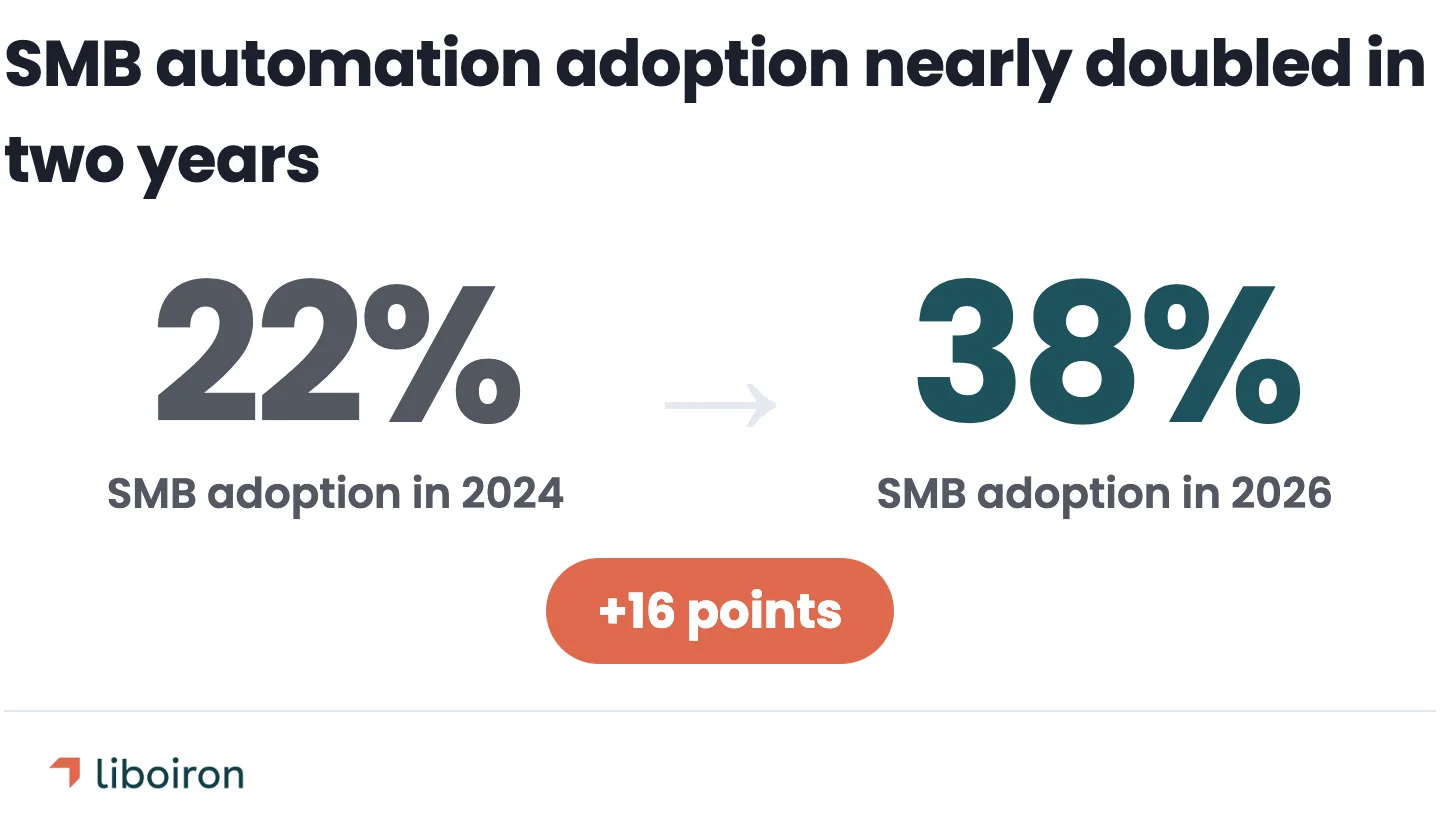
SMB automation adoption rose from 22% in 2024 to 38% in 2026, and the primary driver is exactly this: growing companies hitting operational ceilings that can't be solved by hiring alone.
You tried automating on your own and it did not work. Bought the software, watched the tutorials, built a few automations. Some of them work. Most of them broke within weeks. The problem is usually not the tool. It is that nobody mapped the full process before building, so the automation only handles the simple cases and falls apart on exceptions.
Your tools do not talk to each other. Sales uses one platform. Operations uses another. Accounting uses a third. Data lives in silos. Reporting requires someone to manually compile information from multiple systems. This is an integration problem, and it is one of the highest-ROI automation projects you can run. We cover the technical side of this in our guide on APIs and communication between tools.
What Automation Consulting Costs in Canada
Automation consulting costs vary by scope, complexity, and who you hire. Here are the ranges based on current market data.
By project scope:
By consultant type:
Most SMB engagements in Canada fall in the CA$2,800 to CA$28,000 range for the initial project, with implementation timelines of 4-8 weeks for moderate projects and 3-6 months for complex ones.
The ROI case is straightforward. Businesses report an average 35% reduction in operational costs in the first year of automation. Industry benchmarks show 25-40% decreases in operational costs and 3-5x faster completion of service processes after automation. For a business spending CA$200,000 annually on manual operations, a 25% reduction saves CA$50,000 a year, more than covering a CA$28,000 engagement within the first year.
We use a results-guaranteed model, which ties compensation to delivering the outcomes defined in the project scope. You can estimate your potential savings with our ROI calculator before starting a conversation.
Where Automation Consulting Delivers the Biggest ROI
Automation consulting produces measurable results across industries, but the biggest gains come where manual processes are most entrenched.
Manufacturing. Production scheduling, quality control tracking, inventory management, and supplier communication are all high-volume, repeatable processes. Manufacturers often run on a mix of spreadsheets, ERP systems, and paper-based workflows that don't connect. Automating the handoffs between these systems eliminates the data gaps that cause production delays and ordering errors.
Common automation targets in manufacturing include: purchase order processing, production status updates across departments, supplier communication workflows, quality inspection logging, and inventory reorder triggers. The ROI is highest where one delay in a manual handoff cascades into downstream production problems.
Example: Protech Construction, a Quebec-based general contractor managing 10 simultaneous projects with a 15-person team, replaced multiple disconnected Google Sheets with interconnected project management boards spanning sales, operations, marketing, and HR. The result: 15+ hours saved per week, 30% reduction in errors, and full project visibility across departments. The engagement took six months.
Automation in manufacturing typically starts with the highest-friction handoff point. For many companies, that is the gap between sales quoting and production planning.
Construction. Project tracking, resource allocation, compliance documentation, and subcontractor coordination involve heavy manual oversight. A construction company managing multiple active job sites needs real-time visibility into what is happening where. Automation replaces the daily status calls and weekly spreadsheet updates with systems that capture data at the source.
Sales and CRM workflows. Lead processing, pipeline management, proposal generation, and follow-up sequences are among the most commonly automated business processes. For companies where speed-to-lead matters, the impact is immediate.
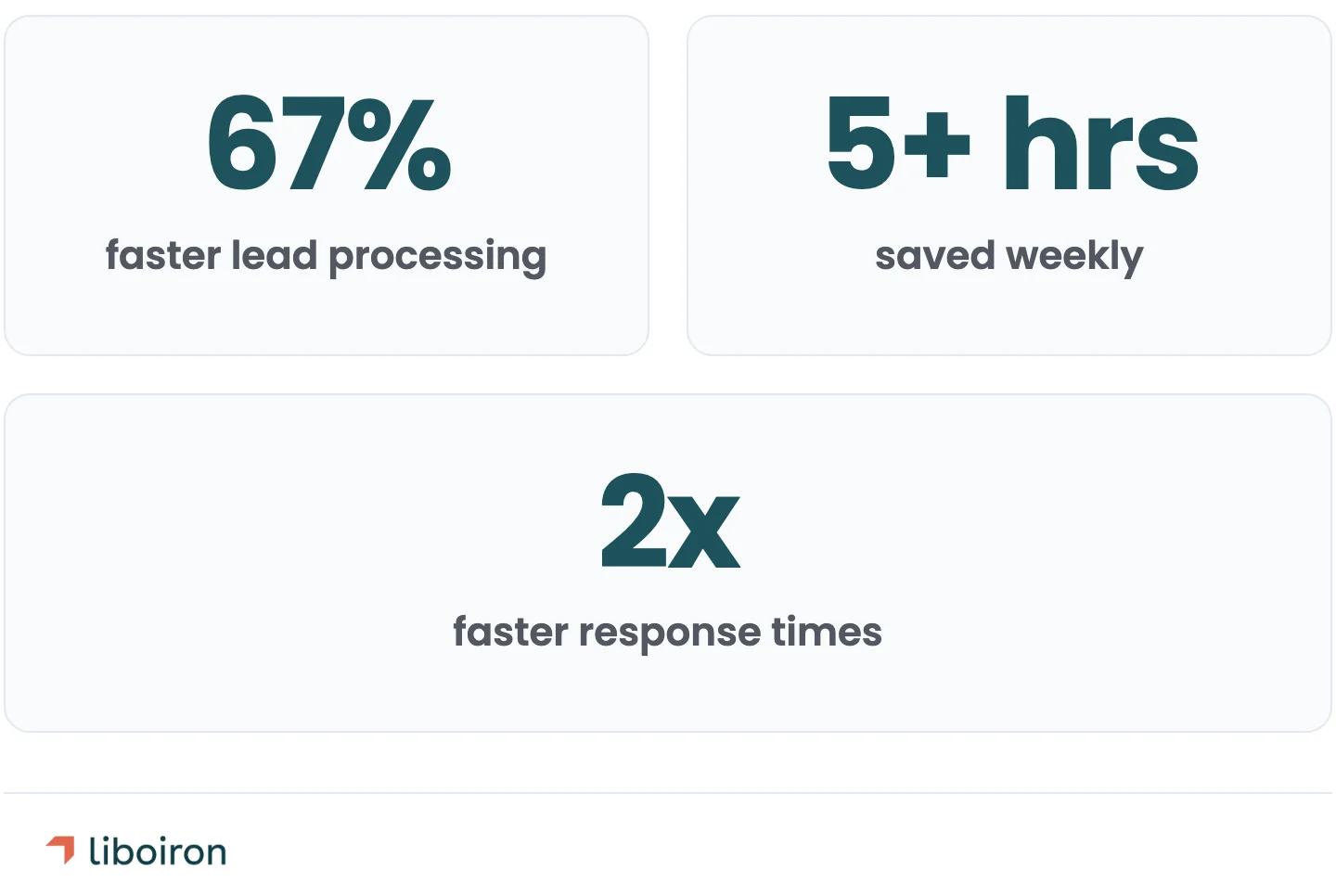
Example: Multilogements ChezTOIT, a Quebec property management company with 700 residential units and a two-person rental team, rebuilt their Pipedrive CRM around their actual rental workflow instead of a generic sales template. Lead sources were connected automatically. The result: 67% faster lead processing (15 minutes down to 5), 5+ hours saved weekly, and 2x faster response times. The project took eight weeks.
CRM rebuilds. Companies with an existing CRM running below capacity often see the fastest payback. The pattern is the same across industries: the licence is paid, the data is half-entered, and the team treats the system as a chore rather than a tool. A rebuild engagement strips the CRM back to the actual sales process, restructures the pipeline stages, builds the dashboards that give leadership visibility, and retrains the team on workflows that make their jobs easier, not harder. Our Lovepac case study shows what this looks like in practice for a manufacturing sales team.
How to Choose the Right Automation Consultant
Not every consultant works the same way. Six criteria separate firms that deliver results from firms that deliver reports.
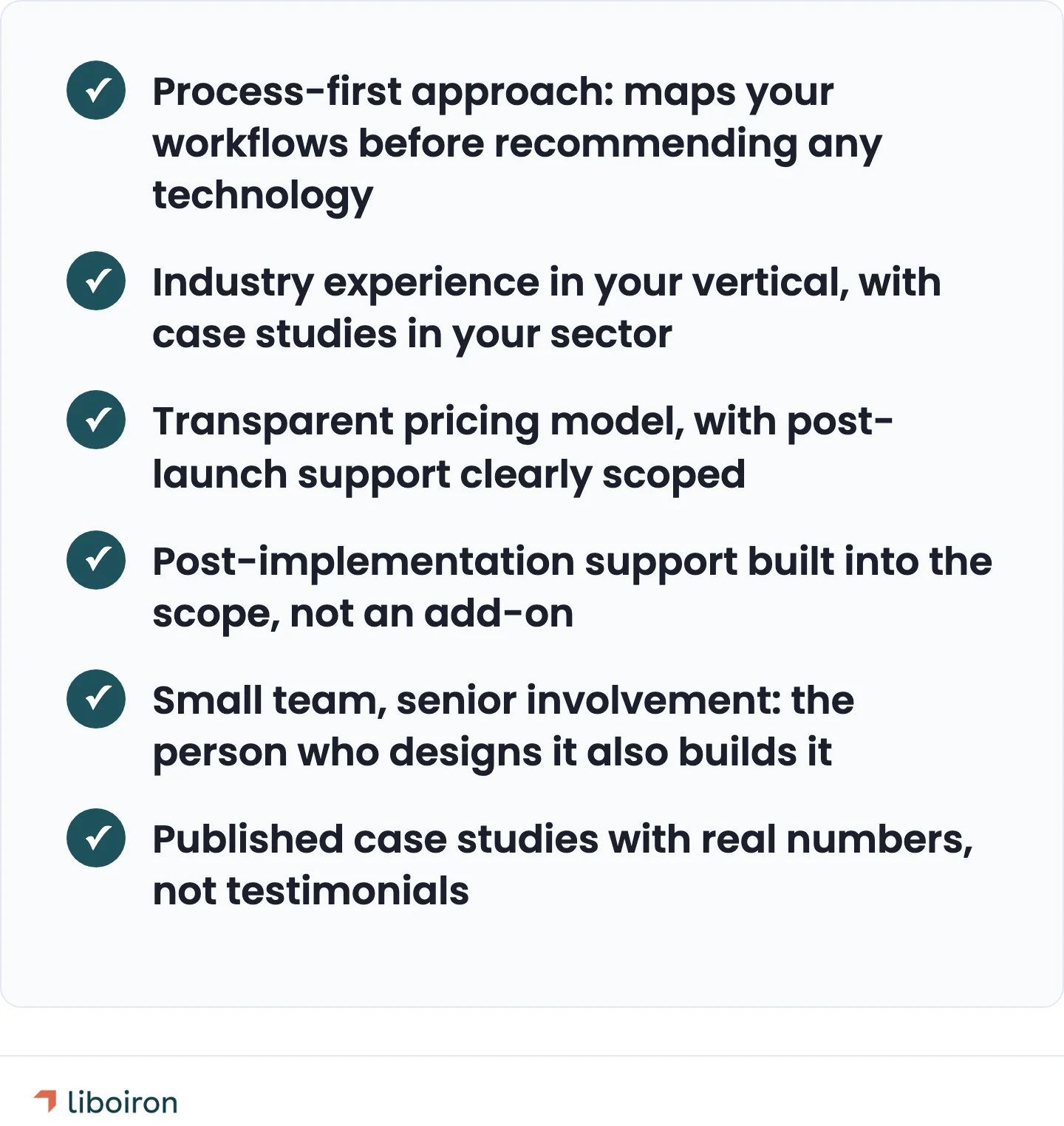
Process-first approach. The consultant should map your workflows before recommending any technology. If the first conversation is about which software to buy, that is a vendor, not a consultant. Ask what their discovery process looks like and what deliverables come out of it.
Industry experience in your vertical. Automation for a construction company looks different from automation for a financial services firm. A consultant who has worked in your industry understands the workflows, compliance requirements, and team structures that a generalist would need weeks to learn. Ask for case studies in your specific sector.
Transparent pricing model. Hourly billing creates an incentive to extend the engagement. Fixed-project pricing creates an incentive to cut corners. Results-based pricing ties the consultant's compensation to your outcomes. Understand which model the firm uses and what is included in the scope. Ask specifically about post-launch support. If it is a separate line item, find out what happens when something breaks in month three.
Post-implementation support built into the scope. Change management barriers affect a significant percentage of automation rollouts. Training and support are not extras. A firm that treats them as add-ons is setting you up for the same adoption problems that caused you to hire a consultant in the first place.
Small team, senior involvement. Large consultancies sell the senior partner in the pitch meeting and assign the junior associate to do the work. Smaller firms are more likely to have the same person who designs the system also build and support it. Ask who will actually be doing the hands-on work.
Published case studies with real numbers. Not testimonials. Case studies with measurable outcomes: hours saved, error rates reduced, adoption rates, revenue impact. If a firm cannot show you specific results from previous engagements, their track record is not verifiable.
Also read:
Frequently Asked Questions About Automation Consulting
What is an automation consultant?
An automation consultant is a professional who helps businesses identify manual, repetitive processes and replace them with automated systems. The scope typically includes process mapping, tool selection, implementation, and training. Unlike software vendors, consultants are tool-agnostic. They recommend the platform that fits your process, not the platform that pays them commissions.
The value of a consultant over a DIY approach comes down to process analysis. Most businesses know what software they want. They do not know which processes to automate first, how their current workflows interact, or what will break when one step changes. A consultant maps those dependencies before anything gets built.
How much does automation consulting cost?
Most SMB automation projects in Canada cost between CA$2,800 and CA$28,000, depending on the number of workflows, complexity of integrations, and whether the engagement includes CRM setup or rebuild. Enterprise projects with custom development and multi-department rollouts can run higher. Hourly rates for independent consultants range from CA$140 to CA$280. Specialized firms charge CA$350 to CA$630 per hour.
How long does an automation consulting engagement take?
Timelines depend on scope. A single-workflow automation (like connecting a web form to a CRM) takes 2-4 weeks. A moderate project covering 3-10 workflows with CRM setup and dashboard builds runs 4-8 weeks. Complex, multi-department engagements with custom integrations and full process redesign take 3-6 months.
The discovery and design phases add 1-2 weeks at the start but prevent the rework cycles that make DIY projects take longer overall. Skipping discovery to save time is the most common reason automation projects miss their deadlines.
What is the difference between automation consulting and AI consulting?
Automation consulting focuses on traditional business process automation: CRM implementation, workflow automation, system integrations, and RPA. The tools are rule-based. If this happens, do that.
AI consulting focuses on intelligent automation: AI agents that make decisions, machine learning models that predict outcomes, and systems that process unstructured data like documents or emails. Where automation consulting handles structured, repeatable tasks, AI consulting handles tasks that require judgment, pattern recognition, or interpretation.
Many firms offer both, and the two often overlap in practice. A CRM implementation might include rule-based workflow automation (automation consulting) and AI-powered lead scoring (AI consulting). The distinction matters when evaluating scope and pricing. For AI-specific consulting, we cover that in detail in our guide on AI automation consulting.
The Bottom Line
Automation consulting exists because buying software is the easy part. Getting it to work inside a real business, with real processes, real teams, and real deadlines, is where most projects fail.
The businesses that get the most value from automation are the ones that invest in mapping the process before touching the technology. A structured engagement, from discovery through ongoing optimization, is the difference between a system your team actually uses and another licence fee collecting dust.
Liboiron helps Canadian SMBs in manufacturing, construction, and operations-heavy industries automate the workflows that slow them down, backed by 18+ years of automation experience and a results-guaranteed engagement model. If you are evaluating whether automation consulting is the right investment for your business, book a free strategic call to map out what the engagement would look like.