Construction CRM & Workflow Automation










.png)





What Liboiron Configures Inside a Construction CRM
Liboiron builds construction CRM systems around the workflows your team uses, not generic templates. Every implementation includes:
- Project pipelines tracking jobs from lead to bid to signed contract, with automated follow-up at every stage
- Cross-department dashboards giving owners and project managers real-time visibility across simultaneous jobs
- Subcontractor coordination connecting field schedules, crew assignments, and deliveries to office systems through automated workflows
- Integrations with accounting (QuickBooks, Acumatica), project management (Monday.com, Civalgo, Procore), and the communication tools your team already runs
Protech Construction replaced Google Sheets with interconnected boards across Sales, Operations, Marketing, and HR. Full project visibility and 30% fewer errors in six months.



How Construction Companies Use CRM Across Sales, Operations, and Finance
Track leads from first contact through bid submission to signed contract. Automated reminders prevent lost follow-ups. Protech Construction runs Sales on the same platform as Operations, so estimates flow into project boards.
Connect field updates to office dashboards across every active job. Coordinate subcontractor schedules and crew assignments from one platform. Groupe EEA automated crew mobilization for 200 employees, cutting response time by 50%.
Automate invoice 3-way matching between purchase orders, invoices, and receiving slips. Streamline payroll approvals with automated timesheet review and overtime flagging.
Results from Real Construction Automation Projects

Questions Construction Companies Ask About CRM
What is a construction CRM?
A construction CRM is a system built to manage client relationships, sales pipelines, and project-related communication for contractors and construction firms. Unlike generic CRM platforms, a construction CRM handles long sales cycles, multiple stakeholders per project, and the coordination between field teams and office operations. It connects estimating, bidding, and follow-up workflows so nothing falls through the cracks between projects.
How is a construction CRM different from project management software?
A CRM tracks the relationship and pipeline before the contract is signed: leads, bids, proposals, and follow-ups. Project management software tracks the work after the contract: scheduling, budgets, and field updates. The strongest setup connects both so data flows from sales into operations without re-entry. Liboiron's Protech Construction implementation connected Sales, Operations, Marketing, and HR on one platform for exactly this reason.
How long does CRM implementation take for a construction company?
It depends on how many departments and workflows are involved. Liboiron built Protech Construction's full four-department system in 6 months, including Sales, Operations, Marketing, and HR on interconnected boards. Groupe EEA's custom crew mobilization automation was deployed in 2 to 3 months. A single-department CRM setup for a smaller team can be faster. The main factors: data migration volume, number of integrations, and team training requirements.
Does a small construction company need a CRM?
Most construction companies outgrow spreadsheets between 15 and 50 employees. At that size, leads get lost between projects, follow-ups are inconsistent, and the owner has no visibility into the sales pipeline. Industry data shows CRM failure rates of 50 to 70% in construction, but the failures come from using generic platforms that don't fit construction workflows. Protech Construction is a 15-person team. A CRM built for how they actually work delivered 15+ hours saved per week.
What does a construction CRM implementation cost?
Liboiron uses project-based pricing, not hourly billing. That covers discovery, system configuration, data migration, integrations, team training, and post-launch optimization. Liboiron's results-guaranteed pricing model ties compensation to delivering the outcomes defined in the scope.
Why do CRM implementations fail in construction?
The most common cause is forcing a generic platform onto construction-specific workflows. Construction teams have unique requirements: long sales cycles, project-based relationships, field data entry, and integration needs with estimating and scheduling tools. When the CRM doesn't match how the team works, adoption drops, and the system becomes an expensive contact list. Liboiron's approach starts with mapping actual workflows during the Discover phase, then builds the system around them.
How Liboiron Works With Your Industry
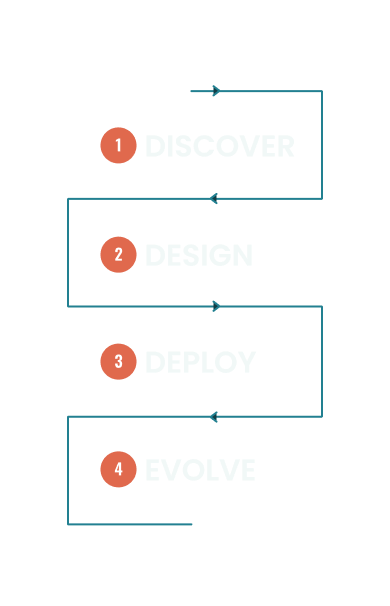
1. Discover
We audit how your team operates today: the tools you use, the manual steps that slow you down, and the gaps between systems. Every project starts with your real workflows.
2. Design
We design a system built for your industry's specific processes. Manufacturing and construction each have distinct operational patterns, and the solution reflects that.
3. Deploy
We implement the system, migrate your data, connect your tools, and train your team on the workflows they will use every day. No generic walkthroughs.
4. Evolve
We optimize based on how your team actually uses the system and add automations as your operations grow. The system gets better over time, not just at launch.
Why Liboiron?
18+ years in automation.
Results-guaranteed pricing.
Intentionally small team.
Bilingual (English and French)
Montreal-based, Canada-wide
From AI agents to work management optimization, we help you work smarter.


.jpg)
Our experience with Liboiron exceeded expectations from start to finish. The project came in on time and on budget and the data migration was seamless with zero disruption to our operations. What really set Liboiron apart was how they took the time to understand our workflows and configured Pipedrive specifically around our needs, rather than delivering a generic out-of-the-box setup. Their training was clear and practical, and support was consistently responsive throughout the process!
Very attentive to our needs. The result of Julien's work fully meets my requirements. He helps us streamline our day-to-day operations.

We had a very good experience with Liboiron. Julien helped us optimize our sales process by adapting our CRM to our needs and automating certain tasks to save us time. A big thank you to Julien and his team.