Table of Contents
What is a CRM and why do manufacturers hesitate?
This is a question that manymanufacturing SME leaders ask themselves. And it's an excellent question.
Here's my short answer: itdepends.
I know, that's not the answeryou were hoping for. But it's the honest answer. A CRM is not a magic solutionthat fits every business, and I'd rather help you make an informed decisionthan sell you something you might not need.
Here's my detailed answer, withconcrete criteria to evaluate whether your manufacturing business really needsa customer relationship management system.
Before going further, let'sclarify what a CRM really is. Many people think that a CRM is simply anelectronic address book. Like a Rolodex from the old days, but on the web.
That's true, but it's much morethan that.
CRM: Beyond simple contact management
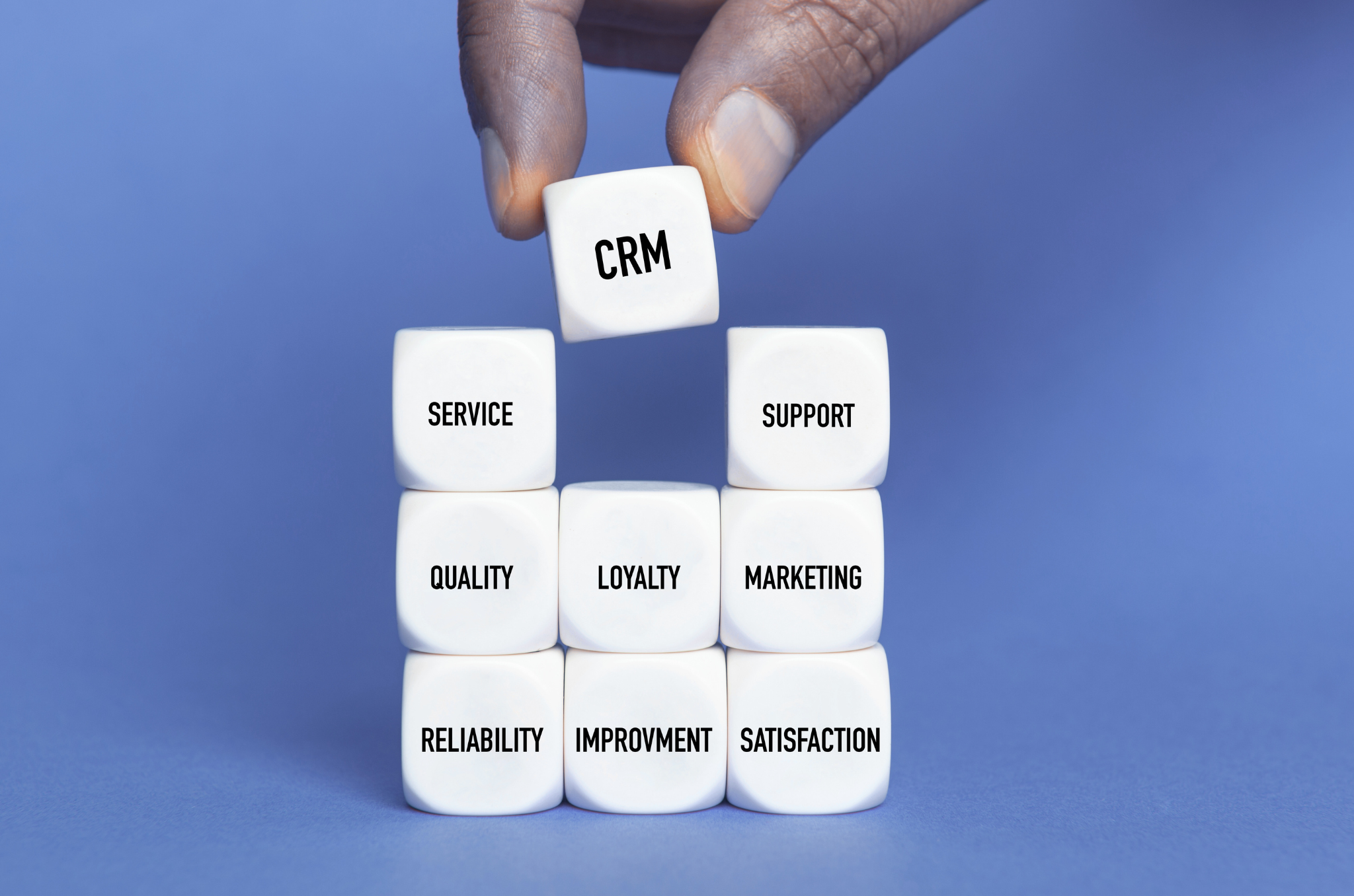
A CRM (Customer RelationshipManagement) becomes the foundation of your business. It's the brain thatcontains all the information about your customers and prospects, where you canconnect other technological tools to make them work together.
Tools like your accounting,your quote system, your telephony, your ERP. Everything can communicate withyour CRM to centralize information in one place.
It's the ultimate tool formanaging and growing your business.
The legitimate concerns of manufacturing leaders
Let's be honest. Quebecmanufacturing SME leaders often have good reasons to hesitate before a CRMproject.
First, there's the cost.Investing in a new system when you're not certain of the return is risky.Second, there's the complexity. How many technology projects have gone offtrack, cost more than expected, or were never really adopted by the team?Third, there's time. Implementing a new system requires energy, and in amanufacturing SME, time is precious.
These concerns are legitimate.Statistics confirm it: only 33% of Quebec manufacturing SMEs use anintegrated CRM or ERP system, according to data from CEFRIO and MESI. AndQuebec SMEs invest substantially less in information technology than the restof Canada, with a high risk aversion rate according to ASDEQ.
But here's the importantquestion: is this caution protecting you, or is it costing you opportunities?
The 8 signs that your business needs a CRM
Rather than telling you"yes, you need a CRM" without knowing your situation, here are 8concrete signs that indicate it's probably time to act. If you recognizeyourself in several of these situations, it's a strong signal.
1. Your customer data is scattered (Excel, emails, paper)
You have information about yourcustomers in an Excel file. Others in your representatives' emails. Some notesare on Post-its or in your sales director's head.
When a customer calls and theperson who usually manages that account is absent, it's panic. You have tosearch everywhere to understand the history, agreements, and specifics of thefile.
It's the classic case of thecolleague on vacation. The customer calls impatiently wanting their problemsolved, but no one is aware of the situation. Lots of stress and a customer whowonders if you communicate internally.
With a CRM, this situationbecomes easy to manage. The customer calls, you find their file in seconds andyou can respond quickly. Everyone is happy.
2. You're losing sales opportunities due to lack of follow-up
Be honest: how many quotes haveyou sent without ever following up? How many interesting prospects did you meetat a trade show only to never contact them again?
The statistics are brutal: 79%of all marketing leads are never converted into sales, often due to simplelack of systematic follow-up, according to Pardot.
In sales, good follow-up isoften what brings the most returns. You can note in a CRM when the customerwill need your products or services, what they prefer, and when to contactthem. You avoid forgotten follow-ups and, by having all the information aboutthe customer, you know what to say to move the sale forward.
That's why the CRM is the toolto use to make more sales.
3. Your team spends too much time on administrative tasks
How much time do yourrepresentatives spend searching for information, entering the same data intomultiple systems, preparing reports manually?
Manual data entry costsapproximately $28,500 CAD per employee annually in lost time, consideringthat 62% of work time can be dedicated to repetitive tasks that could beautomated.
This is time that's notinvested in selling, serving your customers, or developing your business.
4. You don't know where your best customers come from
If I ask you what your 10 mostprofitable customers are and how they found you, can you answer me in less than5 minutes?
A manufacturing subcontractor Iknow didn't know which customers generated the most margin. It was difficult toprioritize commercial efforts. After implementing a CRM with profitabilityanalysis by customer, the company focused on the top 20% of high-margincustomers. Result: 34% increase in overall profitability.
To make informed decisions foryour business, you need data to rely on. A CRM allows you to have this data andespecially to present it in easy-to-understand dashboards.
5. Communication between your departments is failing
Your salespeople promisedelivery times that production can't keep. Your after-sales service discoversproblems that sales should have mentioned. Engineering doesn't know what waspromised to the customer.
A custom equipment manufacturerhad exactly this problem. Complex projects lasting 3 to 12 months, difficultcommunication between sales, engineering, and production. After implementing a CRM with integrated project management, customer response times went from 3days to 4 hours, with better visibility across the entire pipeline.
Centralizing information has ahuge impact on a team, it's incredible. Gone are the days when everyone keepscustomer information on their desk or in their head. It makes everyone's lifeeasier.
6. You have trouble forecasting your sales
"It's going well" or"it's quiet" are not sales forecasts. If you can't estimate withreasonable accuracy your revenues for the next 3 to 6 months, you're navigatingblind.
A CRM can increase salesforecast accuracy by 42%, according to Salesforce. You'll be able to knowexactly when during the year your sales decline, how many prospects your teamhas in its pipeline, and make good decisions for team management, revenueforecasting, and future investments.
7. Customer service depends on the memory of a few employees
What happens if your bestrepresentative or your sales director leaves the company tomorrow? All theircustomer knowledge leaves with them?
A fast-growing agri-food SMEdepended on the memory of 2 key employees. There was an enormous risk ofinformation loss. After implementing a CRM to centralize customer history andautomate follow-ups, continuity was ensured despite the departure of a keyemployee. Recurring revenues increased by 19%.
8. Your growth is slowed by your manual processes
You want to double yourrevenue, but with your current processes, that would mean doubling youradministrative team? That's a sign that your manual processes are slowing yourgrowth.
Sales teams see theirproductivity increase by 14.6% to 34% with a mobile CRM, according toNucleus Research. And a CRM can increase sales by up to 29%.
When we talk about becomingmore efficient and profitable, automation is THE topic to address. Time spentnever comes back and as the saying goes, time is money.
How much does the absence of a CRM really cost?
Let's talk about money. Becausein the end, that's what matters for making a business decision.
The hidden cost of manual data entry
Let's revisit this figure:approximately $28,500 CAD per employee per year in time lost on repetitivetasks that could be automated.
If you have 3 people involvedin sales and customer service, that's potentially more than $85,000 per yearin inefficiency.
A good CRM costs between $30and $50 per month per user. For 3 users, that's between $1,080 and $1,800 peryear. The math is simple.
Lost opportunities that never come back
A metal parts manufacturer with45 employees managed their quotes manually in Excel. There were frequentforgotten follow-ups.
After implementing a CRM withquote follow-up automation, the quote conversion rate went from 18% to 31%in 6 months, with a 40% reduction in administrative time.
If this manufacturer made 100quotes per year averaging $10,000, going from 18 to 31 sales represents $130,000in additional revenue. Per year.
The simple ROI calculation
The average return oninvestment for a CRM is $8.71 for every dollar invested, according toNucleus Research.
Be careful! Something to keepin mind: a CRM is not an expense, but a very profitable investment for abusiness.
Cases where a CRM might not be a priority
I promised you I'd be honest.Here are situations where a CRM is probably not your immediate priority.
Fewer than 10 active customers
If you have fewer than 10customers and 1 or 2 people manage everything, Excel can suffice. You probablyknow each customer personally, you remember their preferences, and thecomplexity of a CRM isn't justified.
Ultra-simple sales process
If your sales cycle is veryshort (a few days), you have few contact points with the customer, andfollow-up comes down to "ordered / delivered," a full CRM might beoverkill for your needs.
Basic priorities not resolved
If you don't yet have a definedsales process, if your team doesn't know who does what, or if you have majorproduction problems, resolve these basics before implementing a CRM. A CRM willoptimize your processes, not create them for you.
91% of companies with morethan 11 employees use a CRM system, compared to only 50% of companies withfewer than 10 employees, according to GetBase. This is no coincidence:complexity increases with size.
How to choose a CRM suited for Quebec manufacturers?
If you recognized yourself inseveral of the 8 signs, you're probably ready for a CRM. Here's how to choosewisely.
The trap of the "CRM module" in your ERP
Many leaders tell me: "Wealready have a CRM, it's included in our ERP."
I must be honest with you: in90% of cases, it's not really a CRM. It's a glorified contact book.
CRM modules integrated intoERPs are often developed as a secondary feature, almost a "bonus" tocheck a box in the feature list. The problem is that ERPs are designed tomanage production, inventory, and accounting. Customer relationship managementis a different expertise.
Result? These modules generallyoffer the bare minimum: a contact list, maybe an order history, and that'sabout it. No visual sales pipeline. No follow-up automation. No reports onsales performance. No integration with your emails or calendar.
It's like having a drill with abuilt-in "screwdriver" function. Technically, it can screw. But ifyou have 50 screws to drive, you'll quickly look for a real electricscrewdriver.
If your sales team doesn't useyour ERP's CRM module daily, it's probably because it doesn't meet their realneeds. And a tool that's not used is a useless tool.
The good news is that adedicated CRM can communicate very well with your existing ERP. You keep yourERP for what it does well (production, inventory, accounting), and you add areal CRM to effectively manage your customer relationships and sales. The twosystems exchange necessary information, without double entry.
Essential features for the manufacturing sector
Not all CRMs are equal. For amanufacturing company, you need specific features.
Precise tracking of complexquotes is essential. In manufacturing, quotes often involve multiplerevisions, approvals, and follow-ups over several weeks or months. Your CRMmust handle this complexity.
Sales-productioncoordination is also crucial. Having real-time visibility on confirmedorders allows for better production planning.
Spare parts and servicecontract management often represents 20 to 40% of a manufacturer's revenue.It's a recurring revenue potential that's often neglected.
Technical history bycustomer also makes a big difference. Specifications, modifications, andpreferences that facilitate re-quotes and future projects must be easilyaccessible.
Finally, integration withyour ERP and accounting eliminates double entry between systems.
The 'automate without risk' approach
The biggest risk with a CRMproject is that it fails. That the system is never really adopted by the team,that costs spiral, that you end up with an unused tool.
That's why at Liboiron, wedeveloped a different approach: automate without risk, pay for results.Instead of asking you for a big initial investment without guarantee, we tieour compensation to the concrete results you obtain.
A CRM well-suited tomanufacturing SMEs can be operational in 4 to 8 weeks for basic functions, withvisible gains in the first 2 weeks. Implementations that drag on for 6 to 12months are generally oversized systems or poorly supported.
Concrete first steps
Before diving in, here are thesteps to follow to successfully complete your CRM implementation project.
First, define your needs andexpectations. What's hurting you today? What are the 3 priority problemsyou want to solve?
Then, choose your CRM.Not the most complete or the most popular, but the one that matches your realneeds.
Plan your CRM BEFOREconfiguring it. It's very important to do this step before diving intousage to ensure success.
Configure it and train yourteam. The challenge with CRM usage is that you need the discipline to enterdata into it. Like with the gym: you buy a membership with all the bestintentions only to end up going once a month. You should appoint someoneresponsible who verifies that everyone is using the CRM properly, untileveryone develops good habits.
Launch and make necessaryadjustments. There will inevitably be modifications to make following realusage.
Also read:
FAQ - Your questions about CRM
What's the difference between a CRM and an ERP for a manufacturer?
An ERP manages your internaloperations: production, inventory, accounting. A CRM manages your customerrelationships: sales, marketing, service. The two are complementary.
For a manufacturing SME,starting with a CRM often makes more sense if your sales and customer follow-upprocesses are your priority. Ideally, you'll eventually integrate them soinformation flows both ways.
How long does it take to see a return on investment?
For a well-supportedmanufacturing SME, the first gains are visible in 1 to 2 months: reduction inadministrative time, fewer forgotten follow-ups. The complete financial ROItypically materializes between 6 and 12 months depending on your initial conversionrate and your prospect volume.
Remember that 47% ofcompanies say the CRM contributes to increasing customer retention by up to 27%,according to Trackvia. Retention means recurring revenue.
My business is too small for a CRM, isn't it?
Not necessarily. If you havefewer than 10 customers and 1-2 employees managing everything, Excel cansuffice. But as soon as you have 20 active customers or more, multiple peopleinteracting with customers, or sales processes that last several weeks, a CRMbecomes relevant regardless of your size.
Quebec has approximately250,000 SMEs, representing 99% of all businesses and employing 70% of theprivate sector workforce. Most of these businesses would benefit from bettercustomer relationship management.
Can a free CRM do the job?
Free CRMs like HubSpot Free orZoho Free can work for getting started if your needs are basic. Theirlimitations: restricted number of users, advanced features locked, minimalsupport.
For a manufacturer withspecific needs (complex quote tracking, ERP integration), an adapted CRM withsupport is often worth the modest investment compared to a poorly used freeone.
How to manage the transition from Excel data to a CRM?
Migration is done in 3 steps.First, clean your Excel data: de-duplicate, standardize formats. Then, importinto the CRM, usually via a CSV file. Finally, validate and adjust.
A good implementation partnerwill guide you through this process to avoid errors. Plan for 1 to 3 weeksdepending on the quality of your initial data.
The next step
Do you recognize several ofthese signs in your business? The question is no longer WHETHER you need a CRM,but WHEN and HOW to implement it without risk.
At Liboiron, we offer a free30-minute assessment to determine if a CRM is relevant to your specificsituation. And if it is, we support you with our "automate without risk,pay for results" model.
No big initial investment. Noproject that drags on for months. Just concrete, measurable results, or youdon't pay.
Contact us to discuss