
Meeting Follow-Up Automation with AI Task Creation






















How Liboiron’s Meeting Agent Turns a Transcript Into Assigned Work
Every AI notetaker on the market produces a summary. A summary is a document nobody opens. The meeting still ends the way it always did: decisions were made, nobody owns them, and by Friday they’re gone.
Liboiron’s meeting agent doesn’t summarize the meeting. It executes its consequences, across every system where the work actually happens.
- Reads any recorded meeting. The agent connects to your recording and transcription tool through its API, or reads transcripts from a connected Drive. No new platform to adopt.
- Fans out into four systems. Activities land in your CRM. Tasks land in your project tracker with an owner and a due date. Commitments land in the calendar. Follow-up emails wait as drafts in the right inbox.
- Writes the documents. Meeting minutes, participant recaps, and first drafts of whatever the session called for — built from what was actually said.
- Checks the last meeting before the next one. The agent tracks what was assigned previously and flags what is still open. That’s the part every other tool skips.
Liboiron runs this agent on its own 15+ meetings a week, across sales, project delivery, and training.


Where Meeting Follow-Up Automation Pays Off
The agent logs the activity against the right opportunity, updates the deal, and drafts the follow-up email for the rep to review. It pairs with the sales assistant agent, which handles the day-to-day CRM work between meetings.
Every decision becomes a task with an owner and a due date in your project tracker. When someone says a name and a date out loud, the agent catches both.
The agent produces the minutes, the recap sent to participants, and the first draft of any document the session called for. What used to take an hour to write up now takes a review.
Before the next meeting, the agent reports what was assigned last time and what is still open. Nothing quietly disappears between two calendar entries.
Automation Results from Liboiron Clients

Meeting Automation Questions from Operations Leaders
How is this different from an AI notetaker?
Notetakers produce a summary and stop there. This agent produces work: an activity in your CRM, a task with an owner in your project tracker, an entry in the calendar, a draft in the right inbox. The summary was never the problem. The follow-through was.
Which recording and transcription tools does it connect to?
Any tool that exposes an API, and any transcript that lands in a connected Drive. Liboiron maps the agent to whatever your team already records with, rather than asking you to switch platforms.
Where do the tasks and activities end up?
Your CRM (Pipedrive, HubSpot, Salesforce), your project tracker (Asana, Notion, and others), your calendar, and your email inbox. Liboiron connects the agent to the systems your team already works in. Custom integrations are available for platforms not listed here.
Does the agent create things without anyone approving them?
Only if you choose that. The recommended setup routes everything through the meeting organizer, who approves the list before anything is created. Fully autonomous operation is available once your team trusts the output, and most teams get there within a few weeks.
Does it work in French, and in bilingual meetings?
Yes. The agent handles French and English, including meetings where participants switch between the two mid-sentence — which is most meetings in Quebec. Tasks and documents come out in the language you configure, not the language the meeting happened to be in.
How long does it take to deploy?
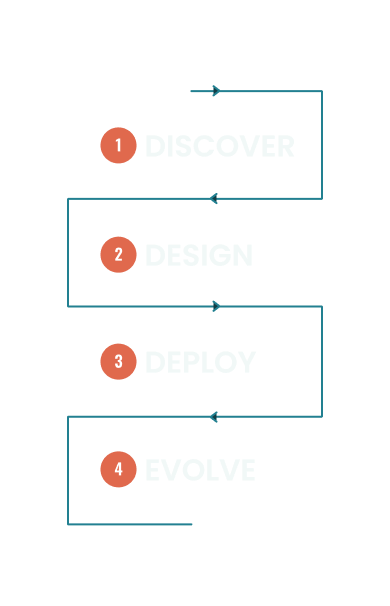
Most deployments run 8 to 12 weeks, depending on how many systems the agent writes to and how your teams assign work today. The process follows four phases: Discover, Design, Deploy, and Evolve. See the full methodology.
How We Build and Deploy AI Agents
1. Discover
We map the manual process your team handles today: where data enters, what decisions get made, and where bottlenecks cost time. Every agent starts with the real workflow, not assumptions.
2. Design
We architect the agent: which systems it connects to, what logic it follows, and how it handles exceptions. You see the design before any code is written.
3. Deploy
We build, test, and launch the agent in your environment. Your team gets hands-on training with real data so the agent works from day one.
4. Evolve
We monitor agent performance and refine the logic as your processes change. AI agents improve with use. We stay involved to make sure they do.
Why Liboiron?
18+ years in automation.
Results-guaranteed pricing.
Intentionally small team.
Bilingual (English and French)
Montreal-based, Canada-wide
Very attentive to our needs. The result of Julien's work fully meets my requirements. He helps us streamline our day-to-day operations.
We had a very good experience with Liboiron. Julien helped us optimize our sales process by adapting our CRM to our needs and automating certain tasks to save us time. A big thank you to Julien and his team.
Explore More AI Agents


Accounts Payable Automation with Invoice Matching